
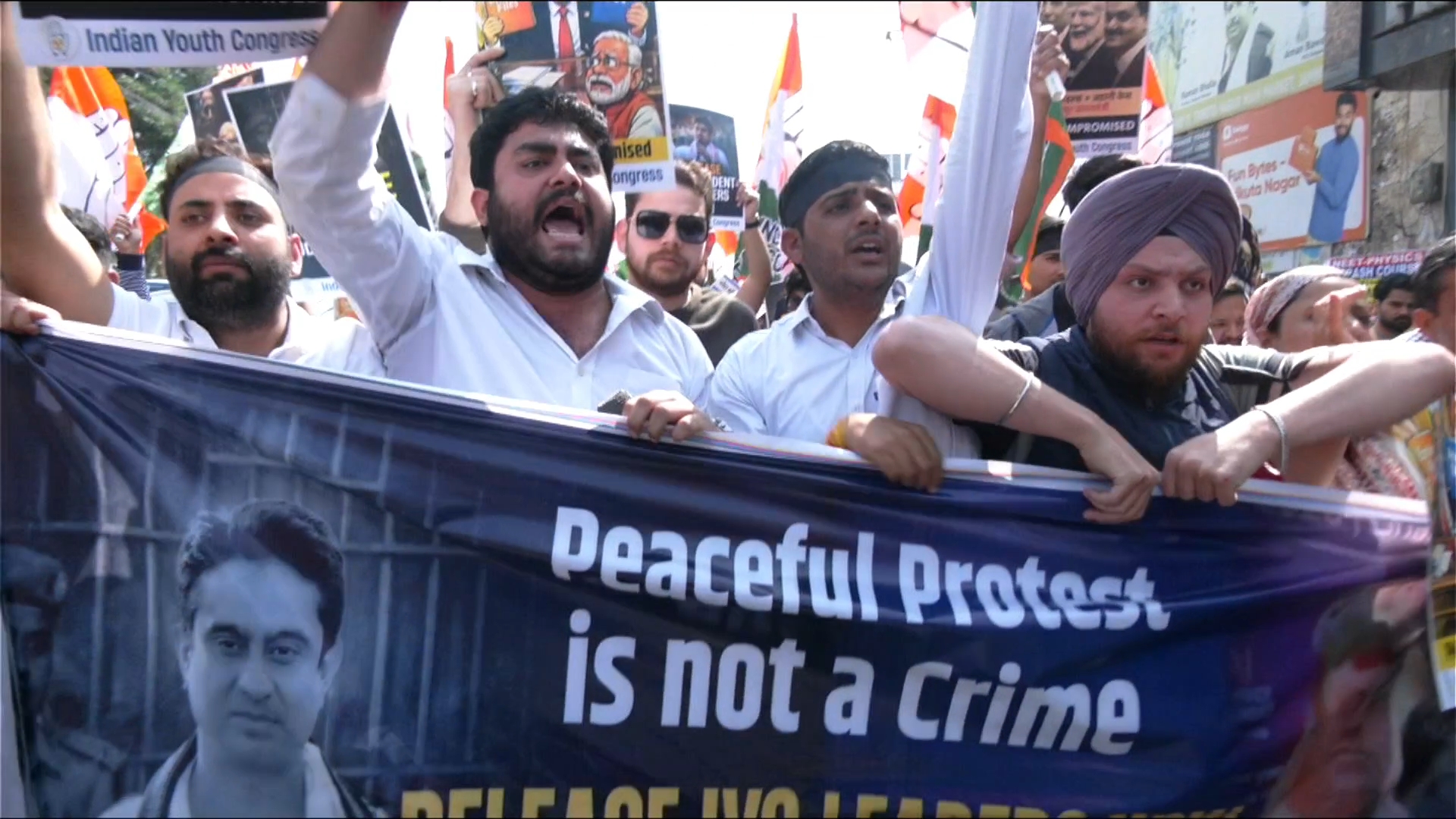
Members of the Indian Youth Congress staged a protest in Jammu on Friday against the proposed India–US trade deal, alleging that the agreement would adversely affect Indian farmers and small traders. The protesters also demanded the immediate release of their national president, Uday Bhanu Chib, who was reportedly detained during a related demonstration.
The protest, held in the heart of Jammu city, saw dozens of Youth Congress workers gathering with placards and banners criticizing the trade negotiations between India and the United States. Raising slogans against the Centre, the demonstrators termed the proposed agreement “anti-farmer” and warned that it could weaken the agricultural sector if implemented without safeguards.
Allegations of Anti-Farmer Provisions
Addressing reporters during the protest, local Youth Congress leaders claimed that the trade deal could open Indian markets to increased agricultural imports from the United States, potentially putting pressure on domestic farmers. They argued that Indian farmers, already grappling with rising input costs and unpredictable market conditions, may find it difficult to compete with heavily subsidized foreign agricultural products.
“The farming community is the backbone of our economy. Any agreement that compromises their livelihood cannot be accepted,” a Youth Congress representative said. He added that the organization would continue to raise its voice until clarity is provided on the provisions of the trade negotiations.
While the details of the India–US trade discussions have not been officially disclosed in full, opposition parties and affiliated groups have expressed concerns about possible concessions in sectors such as agriculture, dairy, and small-scale industries.
Demand for Release of Uday Bhanu Chib
A significant part of the protest focused on the detention of Youth Congress President Uday Bhanu Chib. According to party members, Chib was taken into custody during a demonstration opposing the trade deal in another part of the country.
The Youth Congress leaders in Jammu alleged that the detention was an attempt to suppress democratic dissent. They demanded his immediate release and accused authorities of targeting opposition voices.
“Peaceful protest is a democratic right. Detaining our president for raising farmers’ issues is unjustified,” one of the protesting members stated.
There was no immediate official statement from the local administration regarding the reasons for Chib’s detention or the charges, if any, against him. However, police presence was visible at the protest site in Jammu to maintain law and order.
Police Deployment and Security Measures
Security arrangements were tightened in parts of Jammu city during the protest. Police personnel were deployed to ensure that the demonstration remained peaceful and did not disrupt public movement.
Officials said that the protest was largely peaceful, though brief traffic disruptions were reported in nearby areas as demonstrators marched through key roads. Authorities monitored the situation to prevent any escalation.
No major untoward incident was reported during the protest.
Political Reactions
The protest comes amid ongoing political debates over India’s trade policies and their impact on domestic industries. While the central government has maintained that international trade agreements aim to boost economic growth and expand export opportunities, opposition groups have urged greater transparency and consultation with stakeholders.
Political analysts note that trade negotiations often involve complex discussions on tariffs, market access, and regulatory standards. Concerns from agricultural groups typically center on safeguarding domestic production and ensuring fair competition.
The Youth Congress reiterated that it is not opposed to international trade but insisted that any agreement must prioritize the interests of Indian farmers and small businesses. The organization called for a detailed public disclosure of the trade deal’s terms before finalization.
Broader Context
India and the United States have been engaged in discussions to enhance bilateral trade ties in recent years. Both countries have expressed interest in resolving tariff disputes and expanding cooperation across sectors including agriculture, technology, and manufacturing.
However, trade agreements can sometimes become politically sensitive, especially when they touch upon sectors that support large sections of the population. Agriculture remains a critical part of India’s economy, employing a significant percentage of the workforce.
Youth Congress leaders in Jammu emphasized that they would continue to mobilize public opinion against what they described as policies detrimental to farmers. They also urged the government to initiate dialogue with farmer organizations and opposition parties before proceeding further with the trade negotiations.
Continued Agitation Planned
Protesters indicated that this demonstration was part of a larger, nationwide campaign against the proposed India–US trade deal. They warned of intensified agitation if their demands, including the release of Uday Bhanu Chib, are not addressed promptly.
The Youth Congress leadership in Jammu stated that memorandums would be submitted to local authorities outlining their concerns. They also called on other political and social organizations to join the movement in support of farmers’ rights.
As of now, the situation in Jammu remains calm, with no further announcements from the administration regarding additional restrictions or action.
The developments surrounding the India–US trade deal and the detention of Youth Congress President Uday Bhanu Chib are likely to remain under political scrutiny in the coming days. Further updates are awaited from both government officials and party representatives regarding the progress of trade discussions and the legal status of the detained leader.
