
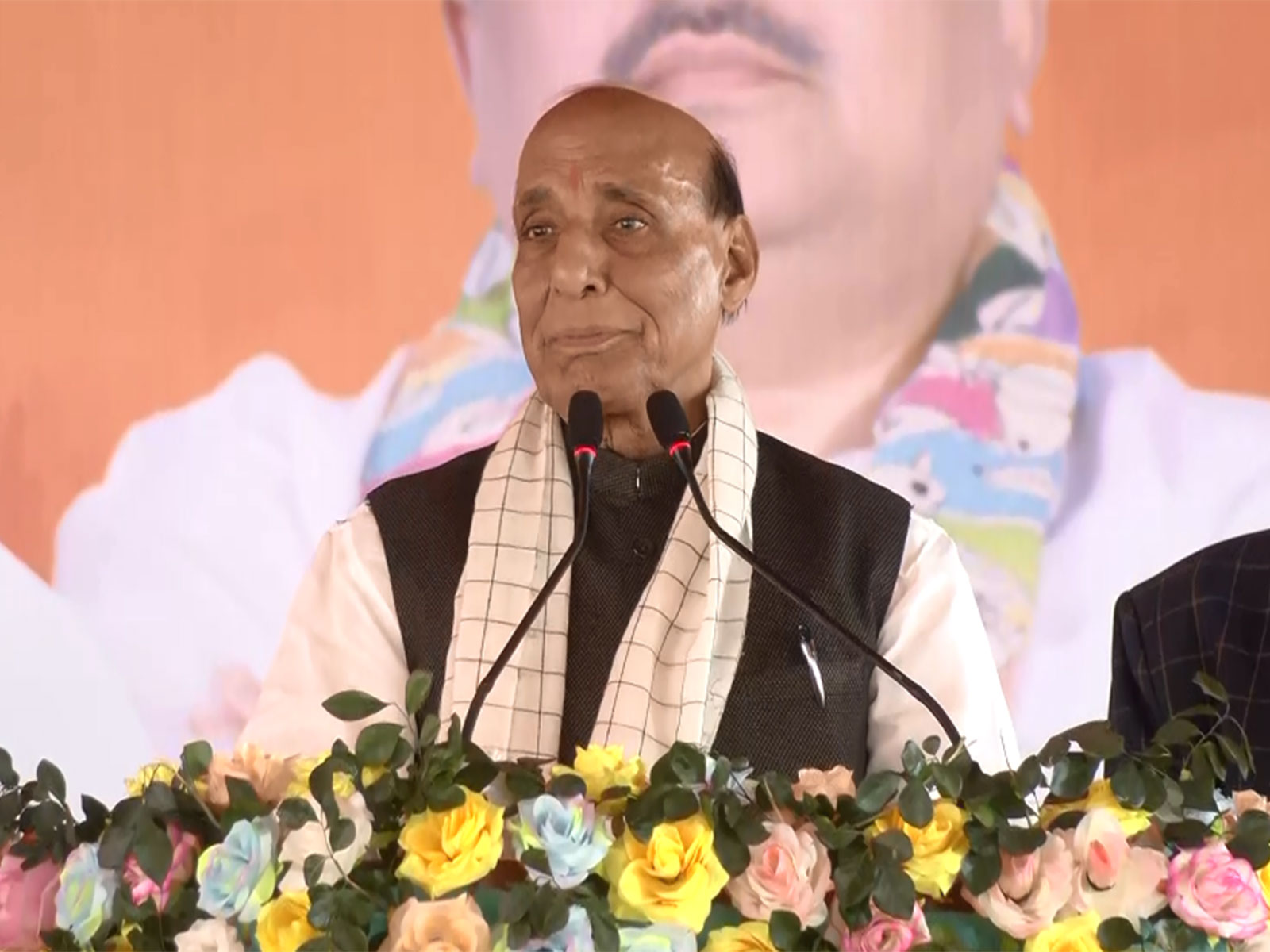
Operation Sindoor Not Stopped Yet, Rajnath Singh Calls India Champion of Peace
Operation Sindoor Not Stopped Yet: Rajnath Singh Reaffirms India’s Stand
Operation Sindoor not stopped yet, Defence Minister Rajnath Singh said on Monday, underlining that India remains alert and prepared while continuing to champion global peace. His remarks come at a time when several regions across the world are witnessing heightened geopolitical tensions and armed conflicts.
Speaking at a public event in New Delhi, Singh emphasized that India’s security operations are ongoing and guided strictly by national interest and strategic necessity. At the same time, he reiterated that India does not support expansionism or aggression and believes in dialogue and diplomacy as primary tools for resolving disputes.
“India has never supported war. We are a champion of peace. But if anyone tries to harm our sovereignty, we are fully capable of giving a strong response,” Singh said.
His statement has drawn attention both domestically and internationally, as it signals India’s balanced approach—maintaining operational readiness without abandoning its longstanding peace-oriented foreign policy.
Operation Sindoor Not Stopped Yet Amid Heightened Global Conflicts
The Defence Minister’s assertion that Operation Sindoor not stopped yet reflects India’s continued vigilance in safeguarding its borders and strategic interests. While he did not disclose operational details, Singh made it clear that the mission remains active and aligned with security objectives.
The remarks come at a time when global conflicts in multiple regions have increased concerns over international stability. From prolonged regional disputes to new flashpoints emerging in strategic zones, the geopolitical climate remains fragile.
India, Singh noted, is closely monitoring global developments while maintaining its independent foreign policy stance.
“India believes in resolving issues through dialogue. However, dialogue must be supported by strength. A secure nation can effectively advocate peace,” he said.
India as a Champion of Peace
During his address, Singh stressed that India’s history and civilizational values position it as a nation that promotes harmony rather than hostility. Referring to India’s diplomatic engagements and humanitarian initiatives, he highlighted the country’s consistent advocacy for peaceful coexistence.
According to the Ministry of Defence, India’s strategic doctrine prioritizes deterrence and defense preparedness while avoiding unnecessary escalation. Singh reiterated that India’s military posture is defensive in nature and aimed at protecting sovereignty rather than pursuing territorial ambitions.
He added that India’s armed forces are among the most disciplined in the world, operating within constitutional frameworks and international norms.
“India has never attacked any country to capture territory. But we will not compromise on national security,” Singh stated.
Strategic Readiness and National Security
Security analysts interpret Singh’s statement that Operation Sindoor not stopped yet as a message of preparedness. It signals continuity in defense measures without escalating tensions publicly.
India’s security environment has evolved significantly in recent years, with changing regional dynamics and emerging technological threats. The government has focused on modernization of the armed forces, increased domestic defense production, and enhanced surveillance capabilities.
Singh pointed out that self-reliance in defense manufacturing remains a priority. He said that strengthening indigenous capabilities ensures both economic growth and national security.
India’s push toward defense indigenization aligns with its broader strategic autonomy policy. By reducing dependency on foreign equipment, India aims to build long-term resilience in uncertain global conditions.
For more details on India’s defense policies, readers can refer to the official website of the Ministry of Defence (https://mod.gov.in), which provides updates on strategic initiatives and reforms.
Diplomatic Balance in a Polarized World
As global alliances shift and tensions rise, India has maintained a carefully balanced diplomatic approach. Singh reiterated that India believes in maintaining friendly relations with all nations while safeguarding its own interests.
“India’s voice is respected internationally because we stand for peace and fairness,” he said.
He added that India’s global engagements reflect its commitment to multilateralism and dialogue. India has consistently called for peaceful resolutions in international forums and supported humanitarian efforts during crises.
According to Singh, being a “champion of peace” does not mean being passive. Instead, it means advocating peace from a position of strength.
Political Reactions and Public Response
Following the Defence Minister’s statement, political leaders across party lines acknowledged the importance of national security. While some opposition leaders called for greater transparency regarding operational developments, most agreed that safeguarding sovereignty remains a shared priority.
Security experts have noted that public declarations such as “Operation Sindoor not stopped yet” are often strategic signals meant to reassure citizens and convey resolve externally.
Citizens have responded with a mix of pride and curiosity. Social media discussions reflect support for India’s strong defense stance, alongside questions about the broader regional security outlook.
India’s Peace Doctrine in Historical Context
India’s foreign and defense policies have long emphasized peaceful coexistence. From non-alignment during the Cold War era to active participation in United Nations peacekeeping missions, India has consistently projected itself as a stabilizing force.
At the same time, India has demonstrated readiness to defend its borders when necessary. Singh’s remarks reinforce this dual approach—peace advocacy combined with strategic firmness.
India remains one of the largest contributors to UN peacekeeping operations, reflecting its commitment to global stability. Its balanced diplomatic strategy has allowed it to maintain relations with diverse global powers while prioritizing national interest.
The Road Ahead
Looking ahead, Singh said India will continue strengthening its defense capabilities while promoting peace initiatives globally. He emphasized that sustainable peace can only exist when nations respect sovereignty and territorial integrity.
“Peace is not achieved through weakness. It is achieved when strong nations choose dialogue over conflict,” Singh remarked.
The government is expected to continue investing in modernization programs, border infrastructure, and advanced technologies to enhance security preparedness.
Observers believe Singh’s statement serves as both reassurance to domestic audiences and a diplomatic message to the international community: India remains vigilant but committed to peace.
Conclusion
The assertion that Operation Sindoor not stopped yet underscores India’s ongoing security preparedness. At the same time, Defence Minister Rajnath Singh has reaffirmed that India remains a champion of peace, even amid rising global tensions.
By balancing operational readiness with diplomatic restraint, India continues to navigate a complex international landscape. Singh’s remarks reflect a broader strategic vision—defend national sovereignty firmly while advocating for stability and dialogue on the global stage.
As geopolitical uncertainties persist, India’s approach of strength-backed peace is likely to shape its security and foreign policy trajectory in the coming months.
With global conflicts intensifying in several regions, India’s message remains clear: peace is the ultimate goal, but preparedness is non-negotiable.
